
Requires a Java Enabled Browser.

Common Terms

[Trojan Website] [About Batteries]

Home
About Us
Where to Buy
Automotive
Deep Cycle
Cell / Cordless
2-Way Radios
Industrial
Marine & RV
Standby Power


Select the first letter of the word from the list below to jump to the appropriate section of the glossary.

A|B|C|D|E|F|G|H|I|J|K|L|M|N|
O
|P|Q|R|S|T|U|V|W|X|Y|Z|

- A -

AGM
A type of battery where the electrolyte is absorbed and held in place by means of a microfibrous silica glass mat which is sandwiched between the plates. The electrolyte is still liquid and remains so for the entire battery life. It is not a GEL CEL battery.
Ampere, or Amp
The unit of measurement of current flow. One volt placed across a one ohm resistance will cause a current of one Amp to flow.
Ampere-hour or AH
The unit of electrical capacity - this tells you how much power the battery will store. Current multiplied by time in hours equals ampere-hours. A current of one amp for one hour would be one amp-hour; a current of 3 amps for 5 hours would be 15 AH. Similar to the "gallons per day" measure of water. Amp-hour ratings will vary with temperature, and with the rate of discharge. For example, a battery rated at 100 AH at the 6-hour rate would be rated at about 135 AH at the 48-hour rate. Ampere-hours (AH) designates the storage capacity of the battery. SLI batteries are not rated in AH, but in "CCA", or cold-cranking amps (marine batteries are often rated in "marine cranking amps").. Terms such as "6 hour rate" or "20 hour rate" indicate that the battery is discharged steadily over 6 or 20 hours, and the Amp-hour capacity is measured by how much it puts out before reaching 80% DOD.
 
Return to Top

- B -

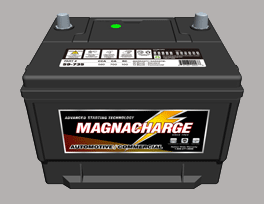
Battery
An electro-chemical device that stores energy. Consists of one or more cells.

- C -

CCA or Cold Cranking Amps
The maximum amperes that can be continously removed from a battery for 30 seconds at zero degrees F before it's voltage drops too low to use. This term is used only for engine starting batteries, and has little to do with the amp-hour capacity or deep cycle batteries.
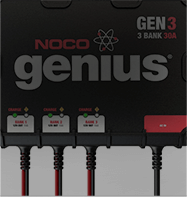
Charge Controller
An electronic regulator that controls the amount of voltage and/or current going from the PV array into the batteries. Regulators come in three general types: on-off, single stage, and 3-stage. Regulators may control the current with a relay or transistor (usually a FET). The simplest type, the on-off, applies full array power to the battery up to a certain voltage, and then cuts off. On-off regulators are recommended only for the simplest systems where a more expensive regulator is not justified. Single stage regulators are the most common. These work similar to the on-off type, but generally also do some regulation of the current going to the battery. For many years, single stage regulators have been the standard, but in the past few years several excellent 3-stage regulators have become available at reasonable prices. Single stage regulators are suitable for small systems. 3-stage regulators are becoming the standard for medium to large systems.
Cycle
A "cycle" is a term used to describe the process of discharging a fully charged battery down to a particular state of discharge. The term "deep cycle" refers to batteries in which the cycle is from full charge to 80% discharge. A cycle for an automotive battery is about 5%.
Cycle Life
How many times a battery can be cycled before it reaches the point where it can only be charged up to (usually) 80% of it's original capacity. This depends on how deep the battery is cycled. Cycle life ratings are not commonly published, and in many cases may not have been done, as it can be quite time consuming. A battery with a cycle life of 900 would take 3 years just to test.

Return to Top

- D -

Deep-Cycle
Batteries that are designed to put out 80% of their capacity time after time without damage
Direct Current (DC)
The only type of electrical current which a PV module or battery can supply. Most home systems and some RV and boats use an inverter to convert the DC into 117 volts alternating current (AC), which is the standard household power.
Discharge and over discharge
Discharging is the process of using power from the battery. As power is drawn from the battery, chemical changes take place between the Lead, the acid, and the Lead Sulfate. Charging reverses this chemical change. Next to overcharging, the worst thing for a battery is to remain fully or partly discharged for long periods of time. This causes sulphation which is a hard Lead Sulfate coating on the plates. Sulfation can reduce battery capacity dramatically.
DOD
Depth of discharge. How much of the available charge has been used compared to 100%. SOC (state of charge is similar - it is how much is left). Most deep cycle batteries are considered to be at 0% SOC, or 100% DOD, when cell voltage is 1.75 volts, or 10.5 volts for a 12 volt battery.

- E -

Electrolyte
The conductive chemical (such as acid), usually fluid or gel, in which the flow of electricity takes place within the battery, and which supports the chemical reactions required.
Equalization
Equalization is a "supercharge" which is applied to the battery at intervals of from 2 to 8 weeks. This charge voltage is about 10% higher than the normal float or trickle charge. This ensures that the cells are all equally charged, and in flooded batteries makes sure that the electrolyte is fully mixed by the gas bubbles. Gelled and sealed batteries in general should be equalized at a much lower rate than flooded - usually the final charge cycle on a 3-stage charger is sufficient to equalize all the cells.

Return to Top

- F -

Float
The voltage at which the battery is "floated", or just enough current is supplied to equal the self-discharge of the battery. This is typically about 14.2 volts for a 12 volt battery.

- G -

Gassing
Gassing occurs when more current is being fed to the battery than it can use. The excess current produces Hydrogen and Oxygen gasses. Some gassing is normal, but excessive gassing can indicate that the batteries are being overcharged. The gasses released are explosive if a spark or flame occurs, so adequate ventilation must be provided. Batteries normally start gassing at about 80-90% of full charge. A common fallacy is that you should stop charging as soon as the battery starts gassing. Most batteries start gassing at about 80% SOC, so if you quit charging at that point, you will never get a full charge. Most better chargers cut back on the current when the battery reaches this point to prevent excess gassing.
Gassing and sealed gel cells
Gelled cells will withstand much less heavy gassing than AGM or flooded batteries. The gel can develop large bubbles or "pockets", which reduce battery capacity due to poor contact with the plates. It can also cause the gel to dry out from water loss, making these pockets permanent. Gelled batteries are charged at a slightly lower voltage than flooded, .1 to .3 volts less to avoid over-gassing.
Gel-Cell
Gelled batteries, or "Gel Cells" contain acid that has been "gelled" by the addition of Silica Gel, turning the acid into a solid mass that looks like hard Jell-O.

Return to Top

- H -

Hydrometer
An instrument used to check the specific gravity (strength) of the electrolyte in the battery. Most Lead-Acid batteries will be in the range of 1.1 to 1.3 specific gravity, with most fully charged batteries being about 1.23 to 1.30 (some hydrometers multiply this number by 1000, so 1.23 would read as 1230.) Some batteries manufactured for use in very hot or very cold climates may have stronger or weaker acid. If so, it is usually marked on the battery.

- I -

(empty)

- J -

(empty)

- K -

(empty)

- L -

Low Voltage Cutoff, or LVD
The voltage at which most load controllers and inverters will disconnect from the battery to avoid totally draining the battery. This is usually at about 10.5 volts for a 12 volt system.

Return to Top

- M -

(empty)

- N -

(empty)

- O -

Overcharge
Overcharging is one of the most destructive elements in battery life (the other is long term undercharging). Overcharging causes the plates to disintegrate and shed. These particles end up on the bottom of the cell. Eventually, the cells will short out, fall apart, break apart, or generally die. Overcharging also increases water loss tremendously, causing even more problems. Gelled cells can be damaged faster than flooded, and flooded can be damaged faster than AGM batteries by overcharging. Water loss is a particular problem with sealed gel cells, as the water cannot be replaced. In some cases, severe overcharging can also cause considable heat in cheaper batteries with high internal resistance, causing plates to buckle and cases to warp and break.

Return to Top

- P -

Parallel Connection
Batteries connected in parallel means that all the Positive (+) terminals are connected together, and all the Negative (-) terminals are connected together. Batteries wired in parallel supply the same voltage but higher current. The amp-hour ratings add for each battery, but the voltage stays the same. New batteries should not be paralleled with old ones. (

- Q -

(empty)

- R -

Ratings
Batteries are rated in several ways. Automotive and marine starting batteries are rated in CCA or Cold Cranking Amps. However, batteries used in photovoltaic systems are rated in Ampere Hours (AH). This rating tells you how many amps the battery will put out if dishcarged over a specified period of time, usually 8 or 20 hours. A 100 AH battery will give you 1 amp for 100 hours, or 100 amps for one hour. AH is a the measure of capacity for deep cycle batteries.
Reserve Capacity
Reserve capacity is sometime used to rate deep cycle batteries. It is the number of minutes that a battery can maintain a useful voltage under a 25 amp discharge rate. Reserve capacity is probably a more useful measure than AH for batteries that run heavy loads, although most batteries also have tables that show the AH capacity at different discharge rates.

Return to Top

- S -

Series Connection
Batteries connected in series have the Positive (+) terminal of one battery tied to the Negative (-) terminal of the next battery. Power is taken from the two terminals at the end of the series string. Batteries wired in series supply the same current but the voltage is higher - for example four six-volt batteries in series will supply 24 volts. The amp-hour rating will be that of the smallest battery if different types are connected.. If old and new batteries are used together, the maximum current will be that of the weakest battery.
Short Circuit
A condition in which a short electrical path is unintentionally created. An example would be setting a wrench on top of a battery touching the terminals. Batteries can supply thousands of amps if short circuited, melting the wrench, the terminals, and showering sparks and molten metal.
SLI
A term used to describe a battery that is used for Starting, Lighting and Ingnition (SLI). Common to automotive-type batteries
Specific Gravity (SG)
The measurement used to express electrolyte strength. SG compares the weight of the electrolyte to water, which has a SG of 1.000. SG changes somewhat with temperature, so most hydrometers come with a correction chart. A full charge should be about 1.265 at 77 degrees F (25 degrees C). This changes with temperature. This cannot be measured in sealed batteries. Pure acid has a SG of 1.835. A fully discharged battery will have a SG of about 1.12. SG should not be measured right after water is added as the reading will not be accurate until the electrolyte is fully mixed.
Sulfation
Even though Lead Sulfate is created in the materials of plates during normal discharging, this term is used to describe the generation of a different form of Lead Sulfate which will not readily convert back to normal material when the battery is charged. Sulfation occurs when a battery is stored too long in a discharged condition, if it is never fully charged, or if electrolyte has become abnormally low due to excessive water loss from overcharging and/or evaporation. Often sulfation can be corrected by charging very slowly (at low current) at a higher than normal voltage, usually at about 2.4 to 2.5 volts per cell at 2 to 8 amps.

Return to Top

- T -

(empty)

- U -

(empty)

Return to Top

- V -

Volt
The unit of measurement of electrical potential or "pressure". Most batteries come in 6, 12, & 24 volt. A single cell is 2 volts.
VPC
Volts per cell - a six volt battery has 3 cells, a 12 volt has 6. All Lead Acid batteries are 2 volts (nominal) per cell.

- W -

Watt
A term used to measure total power. It is amps multiplied by volts. 120 volts @ 1 amp is the same as 12 volts @ 10 amps. It is also amps x amps x resistance. One horsepower = about 750 watts. A battery that can supply 220 AH at 12 volts is equal to 2640 watts.

- X -

(empty)

- Y -

(empty)

- Z -

(empty)

Return to Top

* Above information wholly or in part copyright 1998 by Northern Arizona Wind & Sun Inc.  Used with permission

horizontal rule

All About Batteries | Products

Home Up

Last Modified : 02/27/07 11:55 AM

MBC

Copyright 2002